
Safe Relationships
Grace remembers how to bloom

Demons, Ghosts, and Self-Love
The enchanting rosebushes, lilies, and chrysanthemums
bloom with a deceptive beauty that
masks the chaotic tumult within.
The air is thick with the weight of unspoken strife, as
Religion attempts to cloak the demons
lurking in the shadows, hiding behind
stacks of disheveled boxes and scattered clutter.
The walls remember every accusation,
their crimson stains refuse to fade.
Past storms etched in the water damage
that seeped through tattered shingles,
remnants of a home weathered by neglect and turmoil.
Unmet needs linger like ghosts,
harsh words wielded like rocks
shatter confidence, security, and safety.
Yet somewhere beneath the wreckage,
the warm embrace of unconditional self-love
steadies the heart and soul.
Buried emotions erupt.
Cycles break.
Self-compassion awakens.
Grace remembers how to bloom.

Safe relationships are characterized by a sense of emotional and physical security, where each person feels respected and free to express their true selves. These relationships thrive on trust, consistency, and transparent communication, allowing individuals to share their thoughts and feelings without the fear of judgment, retaliation, or manipulation.
In safe relationships, clear boundaries are established and upheld, ensuring that when someone says ‘no,’ that limit is honored without any negative repercussions. There is an atmosphere of emotional openness, where individuals can freely express their thoughts, emotions, and needs. Conflict resolution and consistency foster accountability and predictability, laying the groundwork for a stable connection. Reciprocity and mutual support ensure each person’s needs, goals, and independence are recognized and celebrated.
We can recognize emotionally safe relationships through the body’s instinctive responses, known as neuroception, the nervous system’s radar for sensing danger and safety. When we are in a safe environment, our physiological responses reflect this security. Our heart rate remains steady, our breath deepens, our voice tone is warm, and our muscles relax. We make meaningful eye contact, listen without interrupting, and express our needs openly and honestly, without fear of criticism.
Conversely, emotionally unsafe relationships often involve invalidation and dismissal of feelings. In these situations, individuals may feel as if they are walking on eggshells, meticulously choosing their words to avoid provoking an intense reaction. Engaging in behaviors such as stonewalling (refusing to communicate), defensiveness, and contempt becomes common. This pattern can push our nervous system into distress, manifesting through fight-or-flight, freeze, or fawn responses. The physical symptoms of this emotional turmoil may include chronic muscle tension, an accelerated heart rate, shallow breathing, and emotional numbness.
However, we have the capacity to cultivate emotional safety within ourselves. This begins by allowing ourselves to experience an array of messy, uncertain feelings without resorting to self-judgment or abandonment. Engaging in self-validation, the practice of acknowledging our own feelings, alongside clear boundaries and regulating our nervous systems, becomes essential. Rather than punishing ourselves, we can learn to nurture and support our emotional well-being.
To fully embrace our authentic selves, we can replace harsh, critical internal dialogue with supportive, compassionate affirmations. Techniques such as mindfulness, grounding practices, and somatic exercises can effectively calm our nervous systems. By accurately naming our emotions and cultivating curiosity about their messages, we can foster a deeper understanding of our internal experiences. Ultimately, we empower ourselves by honoring our needs and establishing our boundaries, leading to a more authentic expression of who we are and to the building of safe relationships.

Final Thoughts
Surviving unsafe relationships can hinder our ability to cultivate healthy connections in the future. The journey towards discovering emotional safety requires us to embrace unconditional self-love. This involves extending to ourselves the gifts of self-compassion, grace, and nurturance, much like a caring guardian would.
As we embark on this path of self-acceptance, we begin to tune in to the subtle signals our nervous system sends us. Those gentle nudges encourage us to seek solace and reassurance in the comforting embrace of a safe, supportive relationship. By learning to recognize and honor these signals, we open our hearts to deeper, more authentic connections with others.

Weekly Affirmations
I release past relationships that were fraught with turmoil, where my emotions were often dismissed and neglected.
I attune to my nervous system’s signals, allowing it to guide me toward relationships that feel safe and nurturing.
I gift myself unconditional self-love, extending grace and compassion to myself as I heal my emotional wounds.
Reflection
Who helps me feel most like myself?
What qualities make me feel safe with another person?
What behaviors immediately create distance for me?
How do I know when my nervous system feels settled around someone?
What boundaries help me feel safer in relationships?
What would a truly supportive relationship look like?
How can I become a safer person for myself?

Opportunities to Connect
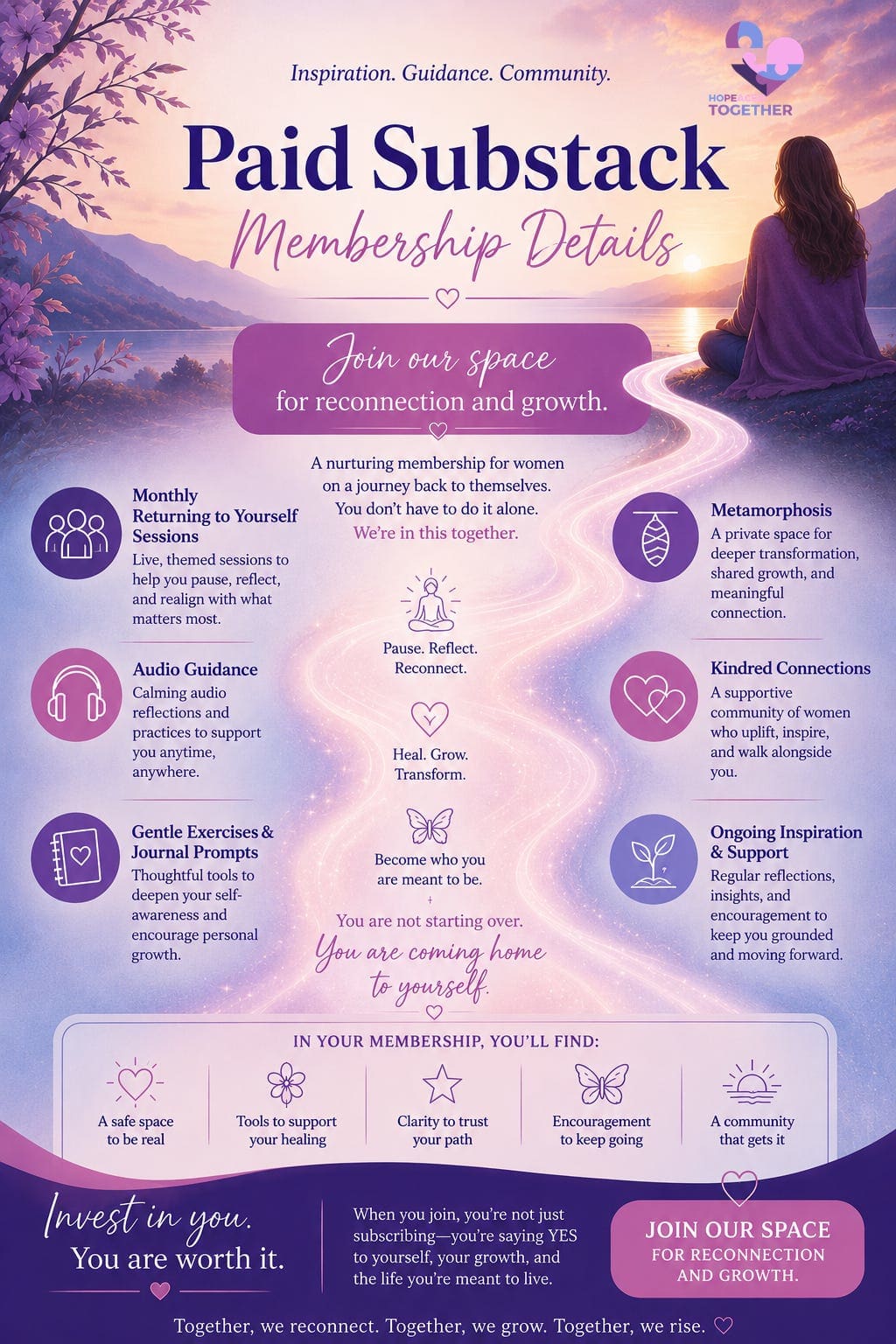
A paid subscription to Hopeaced Together offers a deeper space to reconnect with yourself.
This month, we’re exploring Returning to Joy—rediscovering the parts of yourself that hardship may have hidden. You’ll receive an exclusive Returning to Yourself experience with a guided reflection, practical exercises, journal prompts, and an audio designed to help you cultivate more joy, presence, and self-trust. You’ll also have access to guided meditations, the Metamorphosis and Kindred Connections communities, and other subscriber-only resources created to support your healing journey.
If you’re ready to move beyond surviving and begin creating a life that feels meaningful, peaceful, and alive again, we’d love to have you join us.
Trusting Your Inner Compass
What if the answers you’ve been searching for aren’t somewhere outside of you—but within you?
After years of meeting expectations, surviving difficult seasons, or putting everyone else’s needs first, it’s easy to lose touch with your own voice. You begin questioning every decision, second-guessing yourself, and wondering who you really are beneath the roles you’ve carried.
Trusting Your Inner Compass is a transformational self-paced course that will help you reconnect with your inner wisdom, quiet self-doubt, and make decisions that reflect the life you truly want to live. Through powerful lessons, guided reflection, and practical exercises, you’ll discover how to distinguish fear from intuition, strengthen your confidence, and create a life that feels authentic, peaceful, and deeply aligned with your values.
Imagine making decisions without constant overthinking and setting boundaries without guilt. Feeling grounded in who you are instead of seeking permission from everyone else. That’s the journey this course invites you into.
You already have an inner compass. It’s simply been buried beneath fear, expectations, and years of believing you had to earn your worth.
It’s time to find your way back to yourself.
Enroll today and take the first step toward living with greater clarity, confidence, and self-trust. Your next chapter begins within.
Sending you peace and hope until next time.
Michelle R. Smith
Mental Health Therapist~ Writer~ Peacemaker~ Advocate🕊
I'm so glad to hear it was validating for you to read! I hope you can sort through the circles in your writing.
Thanks for this Michelle - I am circling around something in my writing at the moment which speaks to elements of this so it was an interesting and validating read.